Running out of floss mid-project is one of the most frustrating things that can happen to a stitcher. You're in the middle of a large sky background, your last skein runs out with a third of it still to go, and the new skeins you order have a slightly different dye lot. That slight color shift is visible. The piece is ruined.
The solution is simple: estimate properly before you start and buy everything upfront.
What Is a DMC Skein?
DMC mouliné stranded cotton is the most widely used embroidery floss in the world. Each skein contains 8 meters (8.7 yards / 313.2 inches) of 6-strand thread. You separate strands as needed. Most 14-count Aida cross stitch uses 2 strands.
The floss is wound in a way that lets you pull from one end cleanly. Each skein has a paper band with the color number (which is what patterns list) and a second band for organization.
How the Skein Calculation Works
The cross stitch calculator uses this formula, derived from DMC's own specifications:
1. Total stitched area: stitch_width × stitch_height × coverage_percentage
2. Thread per stitch: (14 ÷ effective_fabric_count) × num_strands inches
3. Total thread needed: total_stitches × thread_per_stitch
4. Skeins: ceil(total_thread ÷ 313.2), always rounded up
This assumes 1 inch of floss per strand per stitch on 14-count fabric, adjusted proportionally for other counts. It's consistent with calculations used by pattern publishers and verified against DMC's thread specifications.
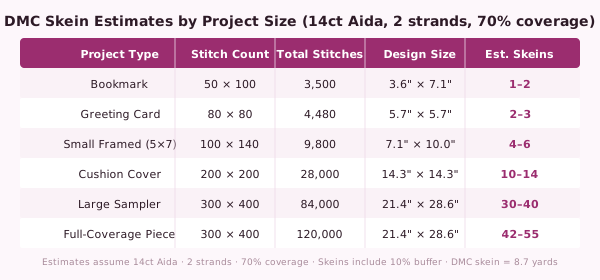
Skein Estimates by Project Size
Here's a practical breakdown based on 14-count Aida, 2 strands, 70% coverage. These are totals across all colors. You'll split skeins by color based on your pattern's color usage.
| Project | Stitch Count | Total Stitches | Approx. Skeins |
|---|---|---|---|
| Bookmark | 50 × 100 | 3,500 | 1–2 |
| Greeting card motif | 80 × 80 | 4,480 | 2–3 |
| Small framed (5×7) | 100 × 140 | 9,800 | 4–6 |
| Cushion cover | 200 × 200 | 28,000 | 10–14 |
| Large sampler | 300 × 400 | 84,000 | 30–40 |
| Full-coverage piece | 300 × 400 | 120,000 | 42–55 |
Full-coverage designs (100% coverage, every square stitched) use more than the 70%-coverage estimate. Enter the correct coverage percentage in the floss estimator for your specific design.
Adjusting for Different Strand Counts and Fabric
If you're stitching on 11-count Aida with 3 strands, your thread use per stitch goes up significantly. On 11ct, each stitch covers a larger area, but you're using more thread per stitch. The net effect is roughly 50% more thread than 14ct/2-strand for the same stitch count.
On finer fabrics (for example 18ct with 1 strand), each stitch uses less thread, but you can fit more stitches into the same inch, so the totals can be similar to 14ct.
The calculator adjusts for all of this automatically. Just enter your fabric count and strand count and it handles the math.
How to Split Skeins by Color
The calculator gives you a total skein estimate. Your pattern's color chart tells you how many colors appear and roughly what percentage each color covers. For colors that cover:
- Less than 5% of the design: 1 skein is enough
- 5–15% of the design: buy 2 skeins
- 15–30%: buy 3–4 skeins
- 30%+: buy 5+ skeins
This is a rough guide. Large background areas (a deep sky, a green field, a white border) are where people most often run short. If any single color covers more than 20% of your design, add an extra skein as insurance.
The Dye Lot Problem
DMC floss is remarkably consistent compared to other brands, but dye lots still vary between production runs. If you start a project with one skein of DMC 312 (navy blue) and run out, the next skein, even with the same color number, may look slightly different in direct light.
For background colors and large single-color areas, buying everything from the same retail purchase helps avoid this. If you shop online and are ordering from a specialty retailer, ask whether their stock comes from the same production batch. Shops like The Thread Gathering and other specialty needlework suppliers often track this.
Working With Multiple Skeins
When you open a new skein, don't just drop it in your project bag. Tag it with the color number. DMC bands fall off easily, and sorting 40 colors of similar-looking blue-green thread by memory is a nightmare.
Use a bobbin system: plastic bobbins from any craft store hold one color each, and you write the DMC number on the bobbin. A project bag holds all bobbins for the current project. When you run low on a color during the project, you'll know exactly which number to reorder.
What If You Over-Buy?
Extra skeins aren't wasted. DMC floss is a craft stash staple. Any stitcher with a few projects under their belt has a growing collection of partial skeins, and these get used in future designs. The DMC color range of 500+ shades means almost any color will show up in a future project.
The only downside to over-buying is the upfront cost. Use the cross stitch thread calculator to get a tight estimate rather than wild guessing, and then add one or two skeins to the largest color areas as a buffer.
Specialty Threads
Some projects use specialty threads alongside or instead of standard DMC: metallic floss, overdyed threads, silk, or wool. These don't follow the same skein length standards.
- DMC Light Effects (metallic): Same 8-meter skein as mouliné.
- Kreinik metallic braid: Sold in shorter lengths, check the specific product.
- Overdyed and hand-dyed threads: Lengths vary by maker (often 8–10 yards).
- Silk floss (Au Ver à Soie, etc.): Usually sold in 5-meter or 10-meter skeins.
For non-standard threads, use the calculator to estimate how many meters you need, then convert based on the thread's listed skein length.
For a breakdown of total project costs including floss, fabric, and framing, see our cross stitch project cost guide. And if you're comparing thread quantities for different fabric counts, the fabric count guide pairs well with this one.
Start your planning with the cross stitch calculator. Enter your stitch count, fabric type, and coverage, and you'll have a solid skein estimate in seconds.
Free Tool
Cross Stitch Calculator
Calculate fabric size, thread amounts, and project dimensions for your cross stitch patterns. Convert between fabric counts and estimate completion time.
Use the Calculator →Cross Stitch Calculator Team
We build free, accurate planning tools for counted cross stitch stitchers. Last updated .
Related Guides
Cross Stitch Fabric Counts: 11ct, 14ct, 18ct, 28ct Explained
Fabric count controls how big your finished design looks. Here's exactly what 11ct, 14ct, 18ct, and 28ct evenweave mean for your project.
craftsAida vs. Evenweave: Which Fabric Should You Choose?
Aida and evenweave look similar but stitch differently. Here's how to pick the right fabric for your cross stitch project.
craftsHow Much Does a Cross Stitch Project Cost?
A full cost breakdown for cross stitch: fabric, floss, hoop, framing, and extras. Know what to budget before you start.