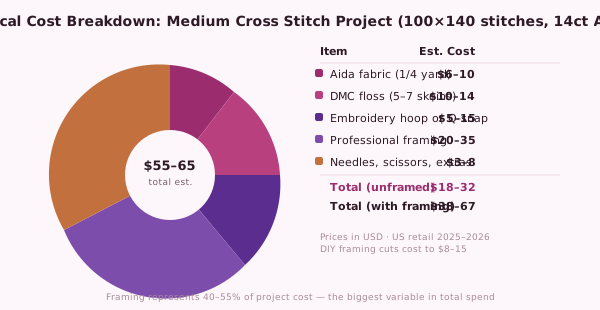
Cross stitch is one of the more affordable needlework crafts. A basic beginner project can cost $15–25 in supplies. But a large, framed heirloom piece can run $80 or more when you factor in professional framing. Here's what to budget for at every level.
The Main Cost Categories
1. Fabric
Aida cloth is inexpensive. You can buy a fat quarter (roughly 18" × 22") for $4–8 at craft stores. Better quality Aida and evenweave fabrics cost more. Zweigart 28-count evenweave or Belfast linen runs $15–30 per yard, but a yard covers several projects.
Fabric cost per project depends almost entirely on how much you need. Use the cross stitch calculator to find your exact fabric size first, then compare prices per yard at your supplier. A small ornament might use $2 of fabric; a large sampler might use $12–20.
Buying by the bolt or half-yard at a specialty shop often saves 20–30% over buying pre-cut pieces at chain craft stores.
2. DMC Floss
As of 2025–2026, a single skein of DMC mouliné costs about $0.80–2.00 depending on where you shop. Specialty and online retailers tend to be cheaper per skein than big-box craft stores, especially if you're ordering a full kit's worth.
A small greeting-card project might need 3–5 skeins ($3–8 total). A large sampler with 40 colors and heavy coverage could need 40–60 skeins ($35–90). Use the floss estimator to get a total skein count, then split by color based on your pattern's color chart.
Buying in bulk, ordering a set of 50 skeins of commonly used colors, reduces per-skein cost. Many stitchers build a floss stash over time and rarely need to buy full sets for each project.
3. Hoop or Frame (for Stitching)
An embroidery hoop to hold your fabric while you stitch costs $3–15 depending on size and quality. Plastic hoops are cheaper; wooden hoops grip fabric better and don't leave marks if you re-position frequently. A 6-inch wooden hoop for most small to medium projects runs $4–8.
Q-snap frames (plastic snap-together frames) run $10–20 for a standard set and are preferred by many stitchers for larger pieces. They hold fabric taut without damaging it and are adjustable.
Scroll frames and stretcher bars for very large pieces can cost $30–100 for a quality set, but they last for years across many projects.
4. Needles
A pack of 6–10 tapestry needles (the blunt-tipped needles used for cross stitch) costs $2–5. Size 24 is standard for 14-count Aida. You'll rarely need to replace them during a project unless you lose them.
A needle minder (a decorative magnet to hold your needle when it's not in use) is a nice add-on at $5–15.
5. Professional Framing: The Big Variable
Framing is where costs jump. A professional framer charges $50–200 for a custom-framed cross stitch piece, depending on:
- Frame size and material (wood, metal, ornate vs. simple)
- Mat board (single vs. double mat, archival vs. standard)
- UV-protective glass (worth it for pieces you want to last)
- Stretching and mounting the fabric (this is the skilled part)
A 5" × 7" finished piece professionally framed typically runs $40–80. A 12" × 16" piece can hit $100–180.
DIY framing is a legitimate alternative. Mounting your piece over archival foam board, inserting it into a store-bought frame (IKEA RIBBA frames are popular with stitchers), and adding a mat cut from an art supply store brings the cost to $10–25. The result can look excellent for straight-edged pieces that don't need professional stretching.
Linen and evenweave pieces often need to be stretched by a professional framer because the fabric grain can pull unevenly. Cotton Aida is more forgiving for DIY mounting.
6. Pattern
If you're buying a pattern (rather than using a free one), prices range from $2–20:
- Free patterns: Many designers share simple patterns on Pinterest, Ravelry, and their own websites.
- PDF downloads: Most indie designers sell charts for $3–10. These are downloadable instantly and yours to print as needed.
- Physical booklets: $5–20 at craft stores and online.
- Large specialty designs: Some complex counted charts (Dimensions Gold, Lavender & Lace, full-coverage landscapes) run $20–40.
For most hobbyist stitchers, patterns are a small part of total project cost.
Total Cost by Project Type
| Project Type | Fabric | Floss | Hoop | Framing | Pattern | Total |
|---|---|---|---|---|---|---|
| Small beginner kit | $3 | $5 | $5 | n/a | included | **$13** |
| Greeting card motif | $3 | $6 | $5 | n/a | $4 | **$18** |
| Small framed piece (5×7) | $6 | $12 | $7 | $50 | $6 | **$81** |
| Medium sampler | $12 | $25 | $12 | $100 | $10 | **$159** |
| Large full-coverage | $20 | $70 | $15 | $150 | $20 | **$275** |
These are 2025–2026 US prices for mid-range supplies (Zweigart fabric, DMC floss). Prices vary by region.
Saving Money Without Cutting Corners
Buy fabric online. Specialty needlework suppliers sell Aida and evenweave at better prices than craft chains. Look at Nordic Needle, 123Stitch, and Herrschners.
Build a floss stash gradually. Buy extra skeins of neutral and commonly-used colors (white, cream, black, navy, forest green) over time. When a project calls for 2 skeins of DMC 321 (red), you might already have it.
DIY framing for Aida projects. A well-cut mat and a quality store frame look very good for most pieces. Save professional framing for your best work.
Download free patterns. Cross Stitch Hub, DMC's free pattern library, and many independent designers on Etsy offer free or low-cost charts.
Use kits for your first projects. Kits include everything (fabric, floss, hoop, needle, and pattern), usually at a slight discount to buying separately. They're also less overwhelming when you're still learning what sizes and counts you prefer.
What About Kits?
Pre-assembled cross stitch kits range from $8 (small beginner designs) to $40+ (large, detailed designs from premium brands like Dimensions or Vervaco). Kits are worth the price if you're new: someone else has done the material math, and you can trust the quantities are correct.
Once you're comfortable, buying pattern + supplies separately usually costs less and gives you more control over fabric and floss brand choices.
To calculate your specific fabric and floss needs before buying, use the cross stitch calculator. For finishing your completed project, our step-by-step guide to finishing and framing covers washing, blocking, and mounting options in detail.
Questions about the tool or the formulas behind it? See our About page.
Free Tool
Cross Stitch Calculator
Calculate fabric size, thread amounts, and project dimensions for your cross stitch patterns. Convert between fabric counts and estimate completion time.
Use the Calculator →Cross Stitch Calculator Team
We build free, accurate planning tools for counted cross stitch stitchers. Last updated .
Related Guides
DMC Floss: How Many Skeins Do You Need?
Running out of floss mid-project is frustrating. This guide shows how to estimate DMC skein counts for any project size.
craftsCross Stitch for Beginners: Start Your First Project
Everything you need to know to start cross stitching: supplies, fabric counts, reading a pattern, and making your first stitch.
craftsHow to Finish and Frame Your Cross Stitch: Step-by-Step
Washing, blocking, mounting, and framing your finished cross stitch. A practical guide to presenting your work properly.