The first piece of equipment most stitchers buy is a hoop. It's cheap, available everywhere, and every kit includes one. But experienced stitchers often abandon hoops in favor of frames, and for good reasons. Here's what to know before you buy.
Embroidery Hoops
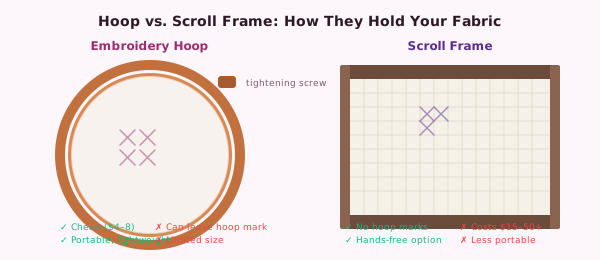
An embroidery hoop is two concentric rings: an inner ring, and an outer ring with a tightening screw. You sandwich the fabric between them and tighten the screw to hold the fabric taut.
Types of hoops:
- Plastic hoops: The cheapest option ($1–4). Hold fabric adequately but can slip. The inner ring is smooth, which means the fabric can loosen as you stitch.
- Wooden hoops: Better grip than plastic. The outer ring's screw mechanism holds more firmly. A quality 6-inch wooden hoop costs $4–8.
- Spring hoops (also called "no-slip" hoops): Use a spring-loaded inner ring. Very easy to insert and remove fabric. Good for frequent repositioning.
- Q-snap frames: Technically not a hoop. Four plastic rods with snap-on clips. Very popular with experienced stitchers because they hold fabric evenly without the ring-pressure point.
Best for:
- Beginners learning the basics
- Small projects (bookmarks, ornaments, greeting card motifs)
- Projects where portability matters (easy to toss in a bag)
- Trying different holding methods before investing in frames
The hoop mark problem: Leaving fabric in a hoop too long can leave a permanent ring mark, especially on dark fabric. To minimize this: loosen the hoop when you're not stitching, or remove the fabric entirely. Some stitchers wrap the inner ring with cotton twill tape to improve grip and reduce marks.
Scroll Frames
A scroll frame has two horizontal dowels (bars) connected by two vertical side pieces. The fabric attaches to the horizontal bars (usually sewn or clipped), and you roll the bars to adjust which section of fabric is in the working area.
Types:
- Basic scroll frames: Two dowels, two side stretchers, wing nuts to tighten. $15–30 for a standard set. Needs assembly.
- Stretcher bar frames: Flat rectangular frames assembled from four lengths of stretcher bar (the same type used for canvas painting). Very stable, good for large pieces. $10–25 for the bars.
- Roller frames with stands: Floor-standing or table-clamp models that hold the frame upright. Both hands are free to stitch using the "stabbing" method. $40–120.
- Qsnap frames: Rigid plastic frame, no screws. Very popular; the snapping mechanism holds fabric securely.
Best for:
- Medium to large projects (anything over 8" × 8")
- Evenweave and linen fabrics (which can distort in a hoop)
- Stitchers who use the two-handed "stabbing" stitch technique
- Projects where you want consistent fabric tension throughout
The advantage: A scroll frame never leaves a hoop mark because there's no ring of pressure on the fabric. The fabric tension is even across the whole working area, which makes counting easier. The finished piece usually needs less blocking because the fabric hasn't been stretched and compressed unevenly.
Q-Snap Frames
Q-snaps deserve their own mention because they're a hybrid that many stitchers prefer over both hoops and traditional scroll frames.
The frame is four plastic pipes (in L-shapes) that snap together to form a rectangle. You lay the fabric over the pipes and snap on plastic clips that grip the fabric. No screws, no tightening.
Q-snap frames come in several sizes (11×11, 8×8, 8×11) and can be combined for custom sizes. A basic set runs $12–18.
The grip is excellent and even. The clips can be re-positioned if the fabric slips. Unlike a scroll frame, you see the full working area without rolling. For projects between 6" and 12" in the working area, many stitchers reach for Q-snaps first.
Which Should You Choose?
Buy a hoop if:
- You're starting your first project
- The project is small (under 6" in the working area)
- You want something lightweight to stitch on the go
- Budget is a priority ($4 gets you a functional hoop)
Buy a scroll frame or Q-snap if:
- Your project is larger than about 8" in the working area
- You're stitching on evenweave or linen (which benefits from even tension)
- You've been stitching for a few months and want to upgrade your setup
- You find that fabric slipping in the hoop is frustrating
For most projects, the size of your fabric tells you which direction to go. Use the cross stitch calculator to find your fabric dimensions. If the design area is over 8 inches in either direction, that's a scroll frame project.
Care for Hoops and Frames
Wooden hoops should be lightly sanded and varnished if they're rough. Rough wood snags fabric. Wipe them clean with a damp cloth; don't submerge in water.
Q-snap frames are dishwasher-safe (top rack) or can be wiped with a damp cloth.
Metal scroll frames: wipe with a dry cloth to prevent rust on the wing nuts. The wooden dowels can warp in very humid conditions, so store them flat or horizontal.
Fabric Matters Too
Whatever holding method you use, the fabric choice affects the result. Aida cloth is relatively forgiving in hoops. It's stiff enough not to distort badly. Evenweave and linen are much softer and can pull unevenly in a hoop if you're not careful. For those fabrics, a scroll frame or Q-snap is a better choice.
Before planning your holding setup, know your fabric dimensions. The cross stitch fabric calculator tells you exactly how much fabric you need, and knowing the size helps you choose the right hoop or frame size.
Once your stitching is done, the next step is finishing. Our guide to finishing and framing your cross stitch covers washing, blocking, and mounting. And if you're just starting out, the beginner's guide to cross stitch walks through all the equipment decisions in order.
Free Tool
Cross Stitch Calculator
Calculate fabric size, thread amounts, and project dimensions for your cross stitch patterns. Convert between fabric counts and estimate completion time.
Use the Calculator →Cross Stitch Calculator Team
We build free, accurate planning tools for counted cross stitch stitchers. Last updated .
Related Guides
How to Finish and Frame Your Cross Stitch: Step-by-Step
Washing, blocking, mounting, and framing your finished cross stitch. A practical guide to presenting your work properly.
craftsCross Stitch for Beginners: Start Your First Project
Everything you need to know to start cross stitching: supplies, fabric counts, reading a pattern, and making your first stitch.
crafts7 Common Cross Stitch Mistakes (And How to Fix Them)
From buying the wrong fabric size to hoop marks and skipped stitches, here are the mistakes most stitchers make and how to avoid them.